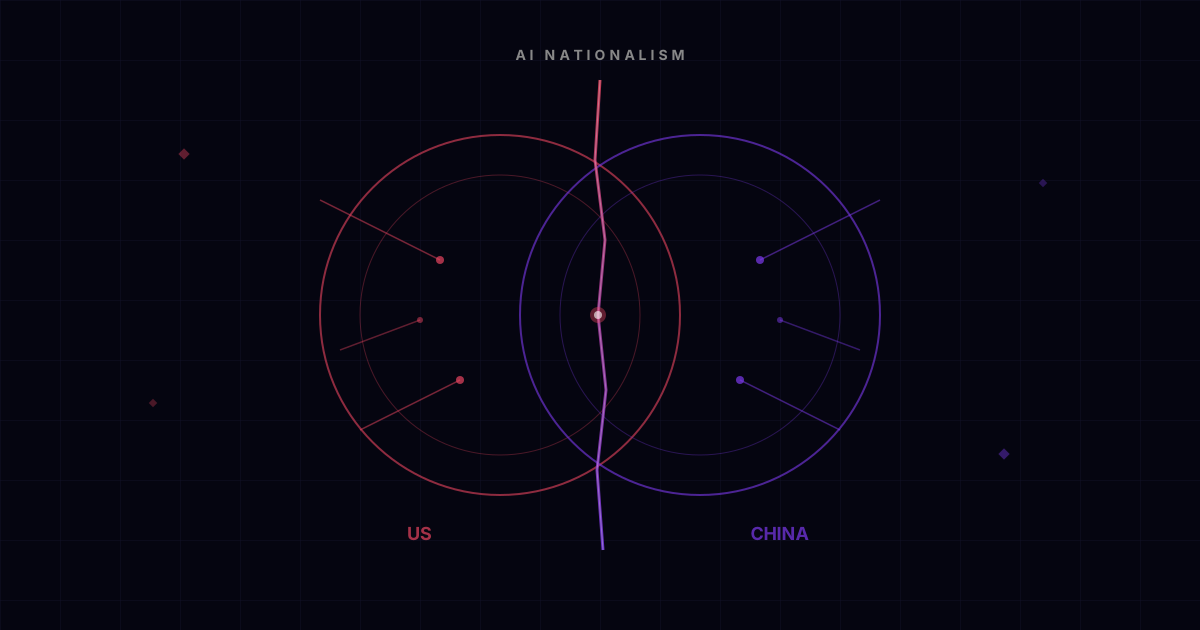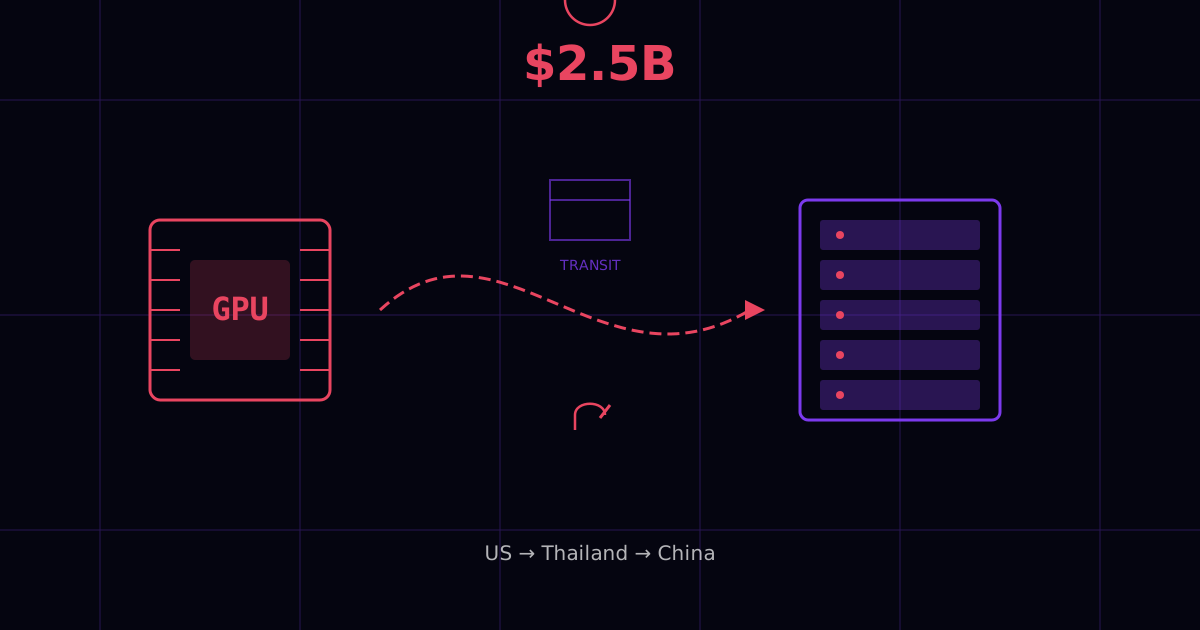
Abstract illustration of AI chip smuggling routes between US, Thailand, and China

The $2.5 Billion Nvidia Chip Heist: How AI Servers Got Smuggled to China Through Thailand

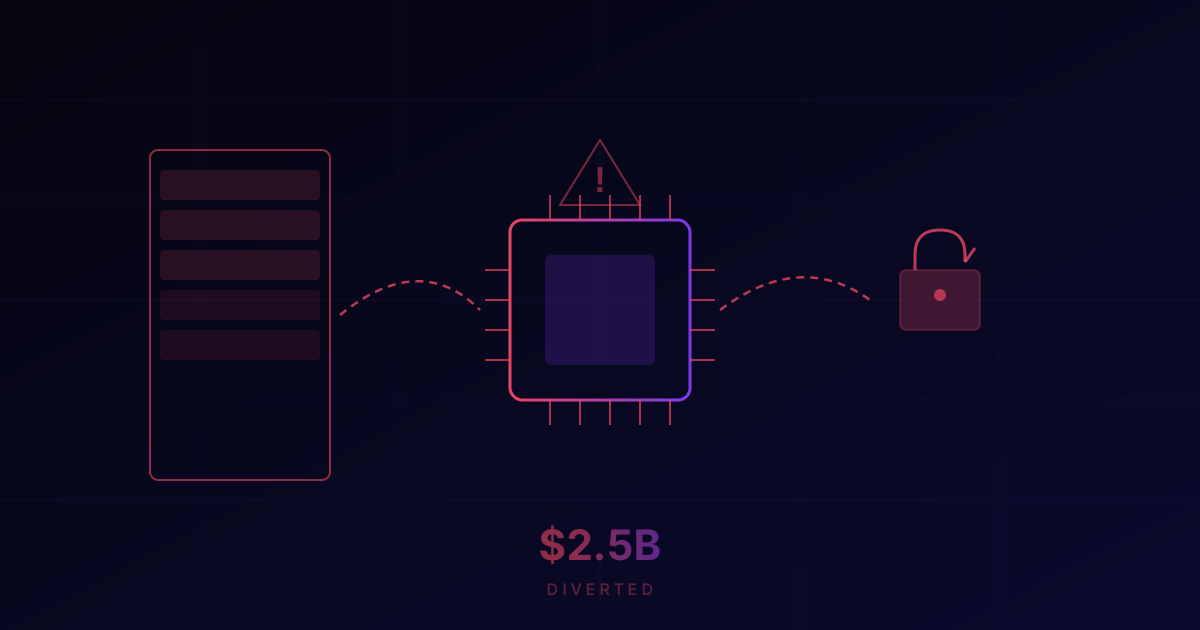
You can’t embargo the most valuable commodity on Earth and expect everyone to play nice. US prosecutors just dropped their biggest AI hardware enforcement action yet — a $2.5 billion smuggling operation that funneled restricted Nvidia servers through Bangkok directly into Chinese hands. The details read like a spy thriller. The implications hit like a freight train. The Operation Bangkok-based OBON Corp allegedly purchased massive quantities of Super Micro servers packed with Nvidia’s H200 and B300 chips — the silicon that powers frontier AI training. Instead of deploying them in Thailand’s growing AI ecosystem, the servers were rerouted to China. Alibaba is named as an end customer. ...
May 10, 2026 · 4 min · DBBS Tech
Nvidia B300 server with price tag showing $1 million against a geopolitical backdrop

Nvidia's Million-Dollar Server Crisis: Smuggling, Shortages, and the AI Hardware War

The same Nvidia server rack costs $550,000 in the United States and nearly $1 million in China. That price gap tells you everything about where the AI industry stands in May 2026. Chinese tech companies are paying almost double for Nvidia’s B300 servers — when they can get them at all. The cause: a collision of exploding AI demand, tightening U.S. export controls, and a smuggling crackdown that just blew the doors off one of tech’s worst-kept secrets. ...

May 9, 2026 · 5 min · DBBS Tech
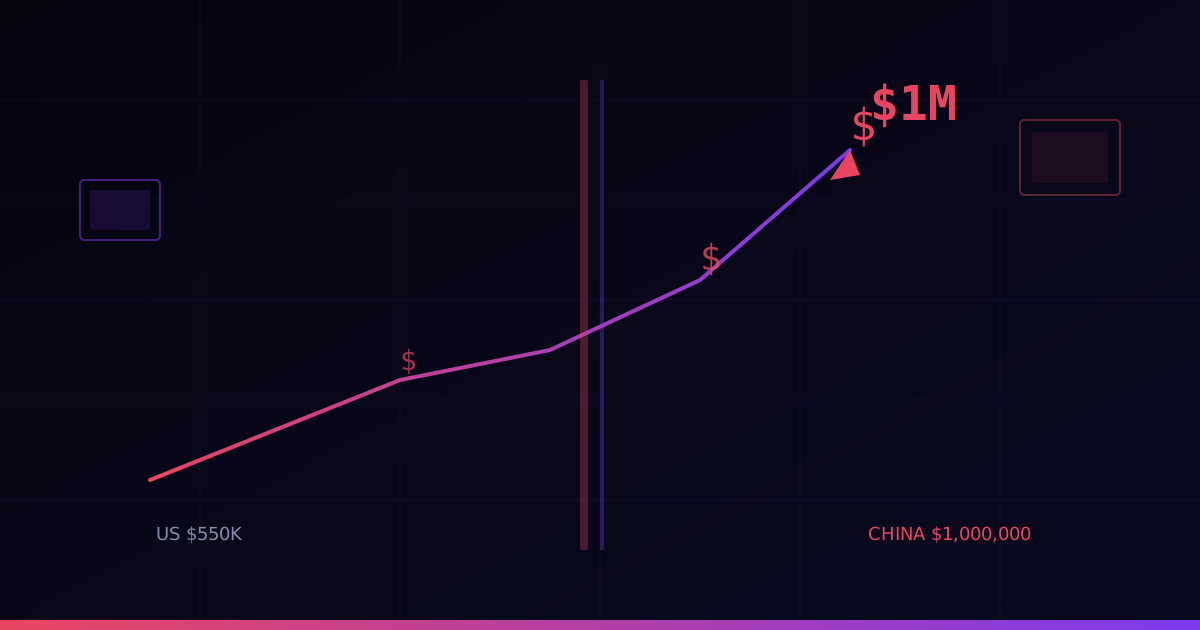
Nvidia B300 GPU servers caught between US export controls and China's black market

Nvidia's B300 Servers Now Cost $1 Million in China — And the Black Market Is Collapsing

A single Nvidia B300 server now costs roughly $1 million on China’s grey market. That’s nearly double the US retail price and almost double what it sold for in China just months ago. The cause is a collision of forces: exploding AI demand, a US crackdown on chip smuggling that’s strangling supply, and the growing desperation of Chinese tech companies racing to stay competitive. This isn’t a pricing anomaly. It’s the US-China tech cold war rewriting the economics of artificial intelligence in real time. ...

May 2, 2026 · 5 min · DBBS Tech
Fractured globe split between US and China flags with AI circuitry

China Just Killed Meta's $2 Billion AI Deal — And the Global AI Race Will Never Be the Same

Beijing just dropped a one-line bomb on the global AI industry. China’s National Development and Reform Commission ordered Meta to unwind its $2 billion acquisition of Manus — the AI agent startup that was supposed to be Zuckerberg’s secret weapon. No negotiation. No diplomatic hedging. Just: reverse the deal. This isn’t a regulatory hiccup. It’s the moment the AI race officially split into two separate universes. What Made Manus Worth $2 Billion Manus builds general-purpose AI agents — software that doesn’t just chat but acts. It codes applications, runs market research, manages data analysis, and prepares budgets autonomously. Think of it as the generation after chatbots. ...

April 27, 2026 · 4 min · DBBS Tech
Stanford AI Index 2026 report visualization

Stanford's 2026 AI Index: The Numbers That Should Keep You Up at Night

Stanford’s Institute for Human-Centered AI just dropped the ninth edition of its AI Index Report — 400+ pages of data on where AI actually stands. Not where the hype says it is. Not where the doomers think it’s headed. Where it measurably is. The short version: AI is more capable, more adopted, and more expensive than ever. It’s also less transparent, more environmentally destructive, and outrunning every guardrail we’ve built. Here are the numbers that matter. ...

April 14, 2026 · 5 min · DBBS Tech
Huawei Ascend 950PR AI chip breaking through Nvidia's CUDA barrier

Huawei's Ascend 950PR Cracks Nvidia's CUDA Moat — and China's Tech Giants Are Lining Up

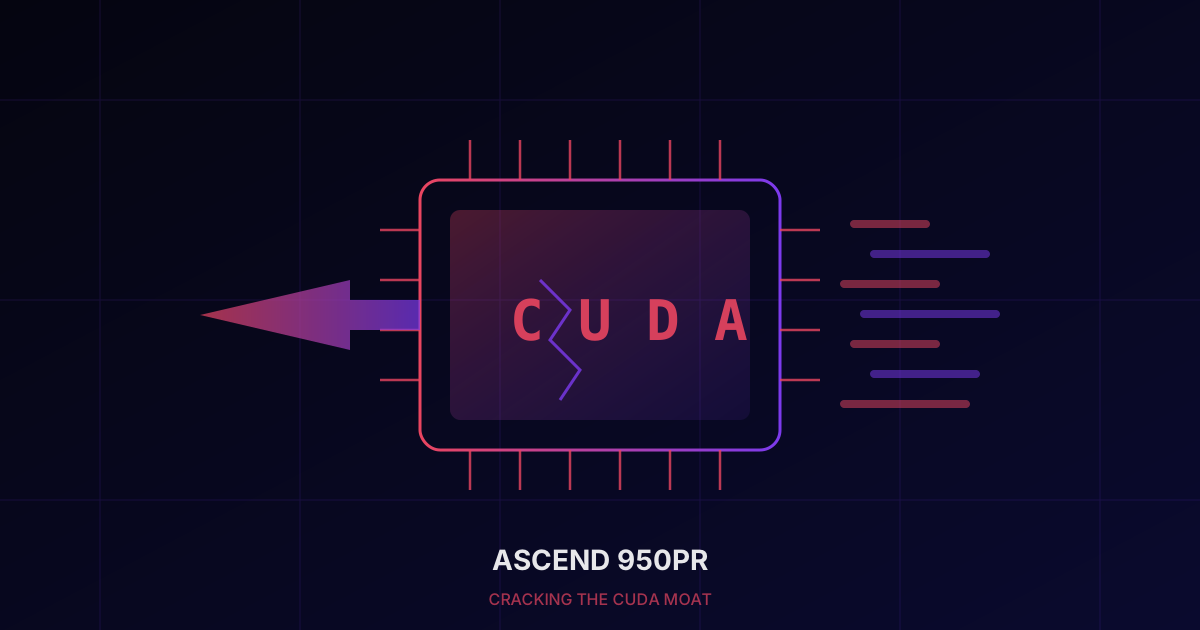
Nvidia’s deepest moat was never the silicon. It was CUDA — the software ecosystem that made every AI developer on Earth, including China’s, completely dependent on Nvidia’s way of doing things. You could build a faster chip, but if developers had to rewrite their entire codebase to use it? Dead on arrival. Huawei just found the side door. The Ascend 950PR, paired with Huawei’s overhauled CANN Next software stack, has reportedly won over ByteDance and Alibaba — two of China’s largest AI consumers. After years of Beijing practically begging its tech giants to go domestic, Huawei may have finally built a chip they actually want to use. ...

March 28, 2026 · 5 min · DBBS Tech
Alibaba XuanTie C950 RISC-V AI chip illustration

Alibaba's XuanTie C950: A RISC-V Chip Built for the AI Agent Era

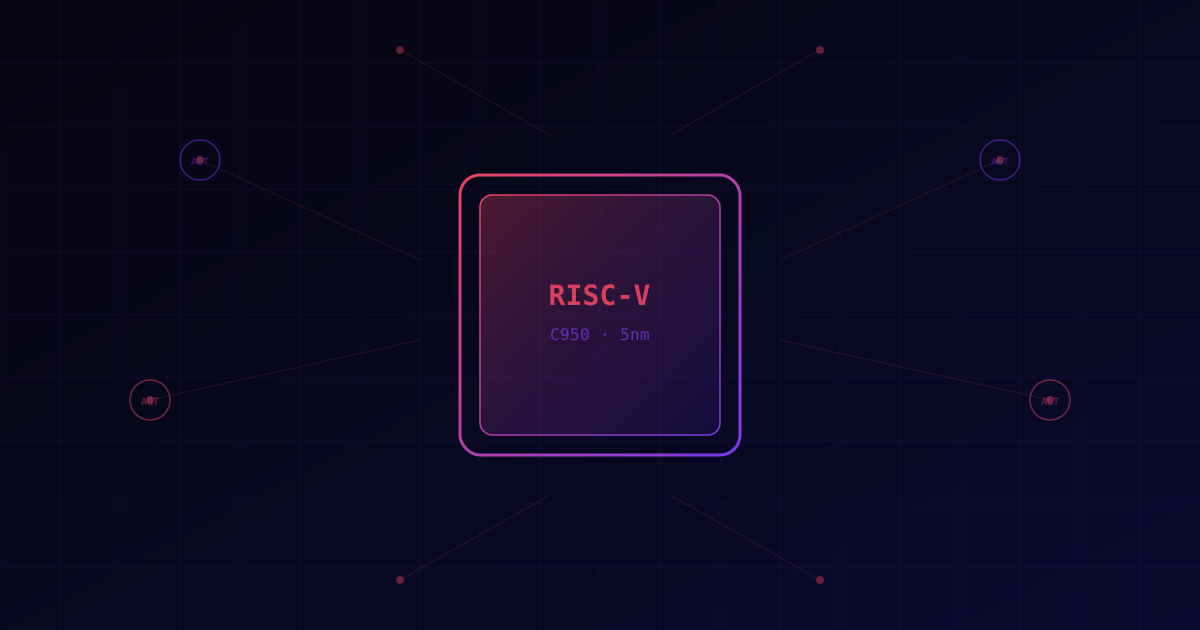
Everyone’s fighting over GPUs. Alibaba just changed the question. On Tuesday, Alibaba’s DAMO Academy unveiled the XuanTie C950 — a 5-nanometer server processor built on open-source RISC-V architecture. It’s the highest-performing RISC-V CPU ever made. But the interesting part isn’t the benchmarks. It’s the thesis behind the chip: that AI agents need fundamentally different silicon than AI chatbots. While Nvidia, AMD, and Intel wage war over who can build the biggest parallel processor for training models, Alibaba is making a deliberate bet on what comes after training. And the logic is harder to dismiss than you’d think. ...

March 25, 2026 · 5 min · DBBS Tech
Abstract illustration of AI chip smuggling and export controls

Hair Dryers and Dummy Servers: Inside the $2.5 Billion Nvidia Chip Smuggling Bust

Federal agents arrested Super Micro Computer co-founder Wally Liaw on Thursday for allegedly running a $2.5 billion scheme to smuggle Nvidia-powered AI servers to China. The playbook included dummy servers staged in warehouses, hair dryers to peel off serial numbers, and a bribed auditor who skipped inspections to enjoy paid entertainment. This is the biggest AI export control enforcement action in U.S. history. And it reads like a heist movie. ...

March 20, 2026 · 4 min · DBBS Tech
AI-powered magnet discovery replacing rare earth elements

AI Just Found 25 New Magnets That Could Break China's Grip on Electric Vehicles

Every electric vehicle on the road hides a dirty secret inside its motor. The magnets that make it spin depend on rare earth elements — and China controls nearly 90% of the global supply. One research team just used AI to crack that problem wide open. The Supply Chain Everyone Ignores Here’s the uncomfortable math: over 86% of EV motors sold in 2024 used rare earth permanent magnets. Each vehicle packs roughly 1.5 kilograms of neodymium iron boron (NdFeB) — the strongest permanent magnets money can buy. They’re in your phone, your MRI machine, your wind turbine, and increasingly, your car. ...

February 19, 2026 · 5 min · DBBS Tech