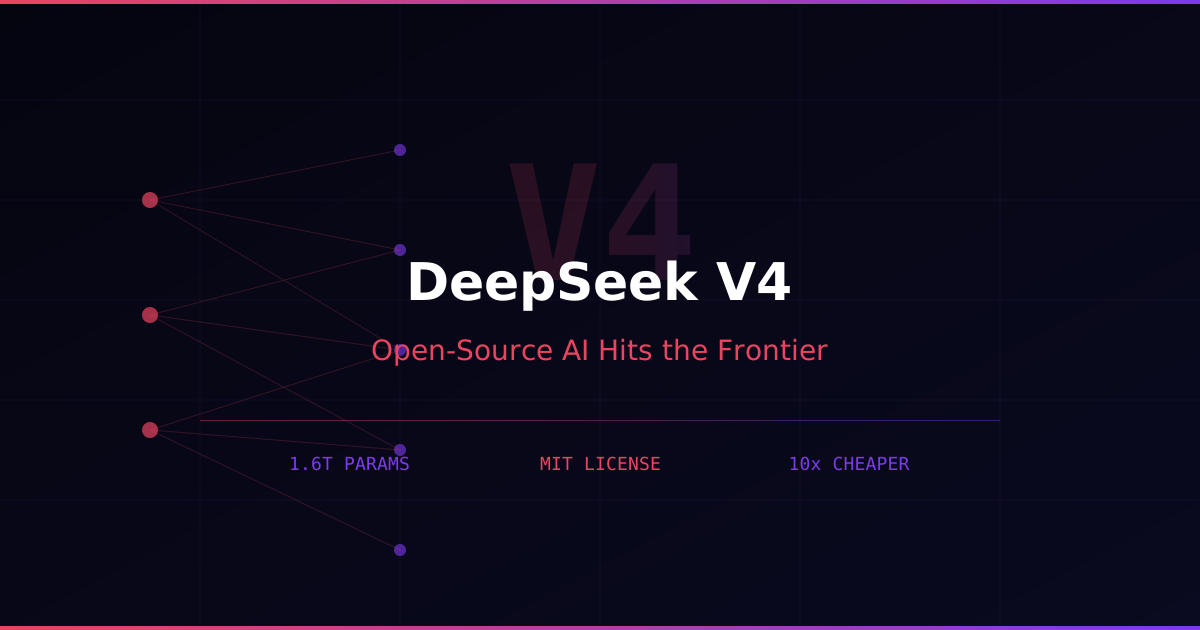
DeepSeek V4 open-source AI model launch

DeepSeek V4 Just Dropped: Open-Source AI That's Matching the Best — at a Fraction of the Price

A year ago, DeepSeek was a curiosity — a scrappy Chinese lab that somehow built a model rivaling OpenAI’s o1 for a fraction of the cost. Markets panicked. Think pieces multiplied. Then the hype faded. DeepSeek didn’t. Today the Hangzhou-based lab released V4 in two variants — V4-Pro and V4-Flash — and the numbers are hard to ignore. This is the largest open-weights AI model ever released, and it’s trading blows with the best closed-source systems from OpenAI, Google, and Anthropic. ...

April 24, 2026 · 4 min · DBBS Tech
Abstract visualization of AI in healthcare with FDA breakthrough designation

The FDA Just Gave Generative AI Its First Shot at Clinical Medicine

The FDA has cleared over 1,357 AI-powered medical devices. Every single one of them used old-school AI — pattern recognition, image classification, signal analysis. Not one ran on a large language model. That just changed. RecovryAI, a San Francisco startup fresh out of stealth, announced that the FDA granted Breakthrough Device Designation to its generative AI chatbot for post-surgical recovery. It’s the first time the agency has given this designation to anything powered by an LLM — and the implications go way beyond one startup’s product. ...

March 3, 2026 · 6 min · DBBS Tech
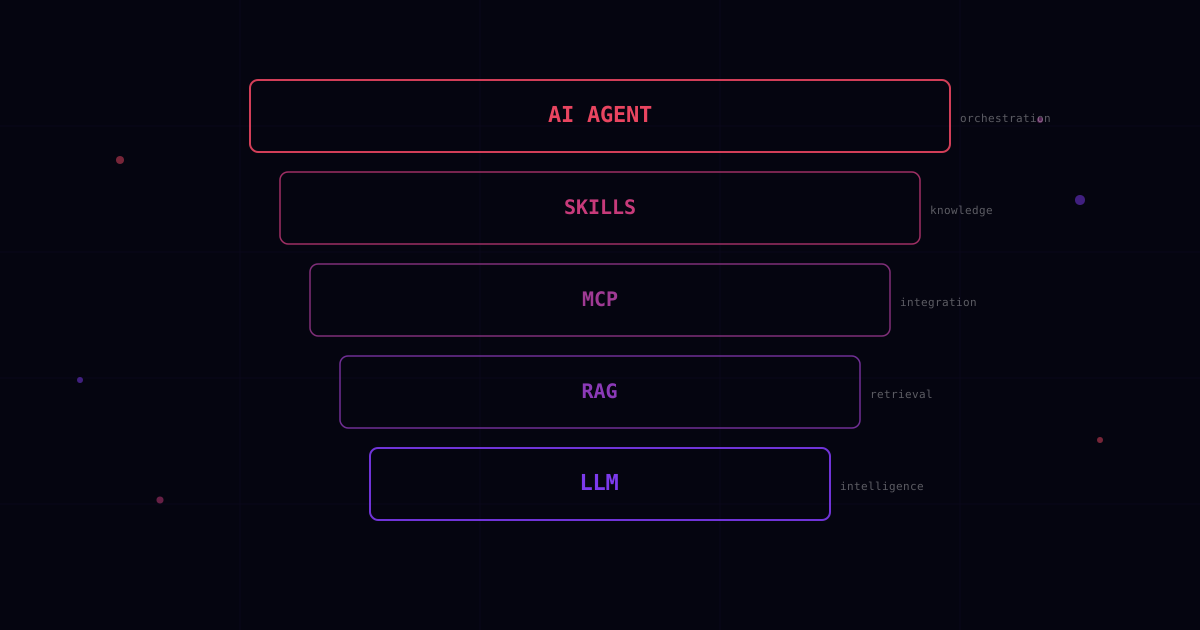
Abstract layered AI architecture stack with glowing nodes

MCP vs RAG vs Agents: Stop Comparing, Start Stacking

Every week, a new blog post asks: MCP or RAG? RAG or Agents? Agents or MCP? The question is wrong. These aren’t competing technologies. They’re layers — and the teams shipping the most capable AI systems in 2026 are stacking all three. Here’s what each layer actually does and why you probably need more than one. MCP: One Plug to Rule Them All LLMs are brilliant and trapped. They can reason about your calendar but can’t read it. They can plan a database migration but can’t execute it. They need hands — and before MCP, giving them hands was a mess. ...

February 18, 2026 · 6 min · DBBS Tech
Abstract visualization of parallel AI agents and neural pathways

Anthropic Just Made Its Flagship Model Obsolete — With a Cheaper One

Anthropic just cannibalized its own flagship model — and that’s exactly the point. Claude Sonnet 4.6, released today, delivers near-Opus performance at $3/$15 per million tokens. That’s one-fifth the cost of the model it’s chasing. In benchmark after benchmark, the mid-tier model is breathing down its big brother’s neck. In some cases, it’s already ahead. This isn’t a minor version bump. It’s a price-performance earthquake. Two Models, Twelve Days, One Message Anthropic dropped Opus 4.6 on February 5th with “Agent Teams” — the ability to spin up multiple AI agents that coordinate in parallel. Think less “chatbot” and more “autonomous project team.” A million-token context window. PowerPoint integration. The works. ...

February 17, 2026 · 4 min · DBBS Tech