The pretense is officially over.
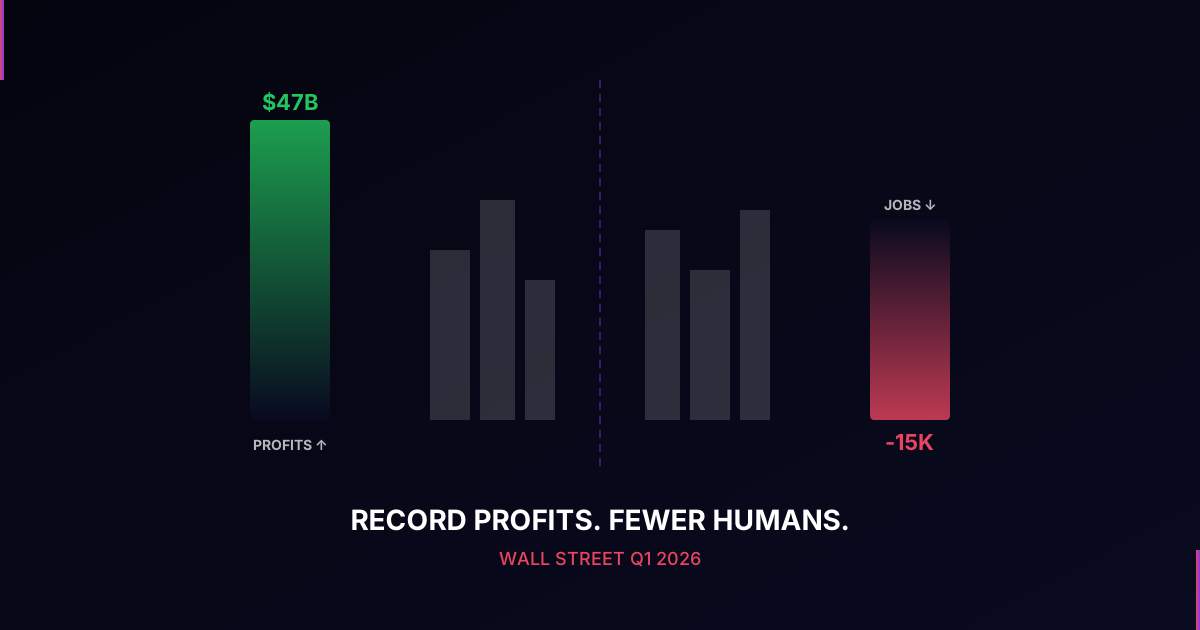
For years, Wall Street executives delivered a comforting mantra: AI will enhance your work, not replace it. This week, as Q1 2026 earnings rolled in, that narrative crumbled in spectacular fashion. JPMorgan Chase, Citigroup, Bank of America, Goldman Sachs, Morgan Stanley, and Wells Fargo collectively reported $47 billion in profits — up 18% year-over-year — while shedding approximately 15,000 employees.
More money, fewer humans. The math is brutal and undeniable.
The Quiet Part, Out Loud
The most striking moment came from Bank of America CEO Brian Moynihan. Less than four months ago, he reassured his 210,000 employees on television: “You don’t have to worry. It’s not a threat to their jobs.”
Last week, after reporting $8.6 billion in Q1 profit, Moynihan changed his tune entirely. The improved bottom line was driven in part by shedding 1,000 jobs through attrition by “eliminating work and applying technology” — which he repeatedly specified was artificial intelligence.
Four months. That’s how quickly “don’t worry” became “AI eliminated those positions and we’re doing more.”
Every Major Bank Is Singing the Same Tune
Wells Fargo is using AI to generate instant creditworthiness memos, create M&A pitchbooks (work that previously kept junior bankers chained to their desks until 2 AM), and auto-route customer service calls. These aren’t pilots — they’re production systems.
Goldman Sachs is building its “One Goldman Sachs 3.0” AI operating model, accelerating cloud migration specifically to “unlock greater productivity and efficiency opportunities” through AI.
JPMorgan Chase confirmed it’s a launch partner in Anthropic’s Project Glasswing, deploying frontier AI for defensive cybersecurity while CEO Jamie Dimon addressed Claude Mythos concerns head-on.
Morgan Stanley CEO Ted Pick offered the most telling reassurance: “AI is our friend, OK?” It sounds comforting until you realize “the ecosystem” has 15,000 fewer people in it than last quarter.
200,000 Jobs on the Chopping Block
According to a Wolters Kluwer analysis, Wall Street banks project eliminating approximately 200,000 roles over the next three to five years as AI absorbs entry-level processing, back-office reconciliation, and routine compliance work.
The roles being created in their place — credit analytics, algorithmic compliance, AI risk advisory — command salaries 25-35% higher than the positions being eliminated. Sounds like “transformation” on paper. In practice, the people losing $65,000 processing jobs aren’t smoothly transitioning into $90,000 AI governance roles.
The World Economic Forum found that while 77% of employers plan to reskill workers for AI disruption, only 57% have actually created meaningful reskilling programs. That 20-point gap is where careers go to die.
The Entry-Level Extinction Event
The cruelest part: the jobs disappearing first are exactly the ones young people need to start their careers.
The traditional Wall Street ladder — grind through 100-hour analyst weeks building models and pitchbooks, earn your way up — is being dismantled from the bottom rung. AI can generate the pitchbooks. AI can write the credit memos. AI can do the data reconciliation that used to occupy armies of fresh graduates.
Anthropic CEO Dario Amodei predicted AI could eliminate half of all entry-level white-collar jobs and push unemployment to 10-20% within five years. After this earnings season, that sounds less alarmist and more prescient — at least for finance.
The irony is thick: the technology making banks historically profitable is simultaneously pulling up the ladder, making it harder for the next generation to access the careers that built the current generation’s wealth.
AI Is Also Becoming the Financial Advisor
While cutting humans internally, banks are deploying AI externally for customer-facing work too. Lloyds Banking Group just became the first UK lender to pilot an AI-powered investment guidance tool — a “satnav for investments” that handles conversations human advisors currently charge for.
The UK’s Financial Conduct Authority is live-testing AI applications with eight institutions including Lloyds, Barclays, UBS, and Experian. AI spending across banking hit $177 million per institution in Q1 2026 — a 33% increase from the previous quarter.
Banks aren’t dabbling anymore. They’re going all in.
The Ticking Clock
Right now, AI-driven cuts are happening under the cover of record profits. Shareholders are thrilled. But as AI becomes ubiquitous across banks, the competitive advantage evaporates. When every bank can auto-generate pitchbooks, the technology becomes table stakes. Profit margins compress. And a significantly smaller workforce has far less slack to absorb the next round of cuts.
Wall Street’s Q1 2026 didn’t just reveal strong profits — it revealed a fundamental shift in how banks think about human labor. The “AI enhances, not replaces” era is definitively over. We’re in the “AI replaces, and we’re honest about it” era.
For banking professionals: adapt rapidly or get automated. For policymakers: 200,000 projected cuts demand a serious conversation about transition support. And for everyone else watching from outside the glass towers — Wall Street is just the canary. If AI can eliminate 15,000 jobs at the most profitable companies on Earth while increasing their earnings, no industry should assume it’s immune.