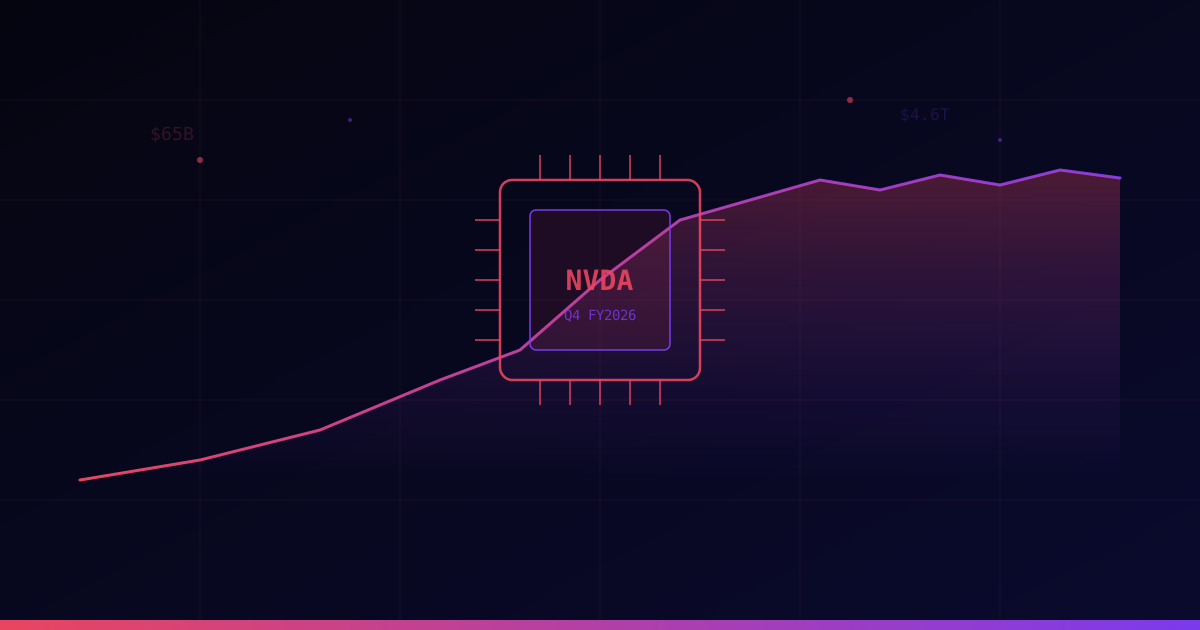
Tomorrow evening, Nvidia drops the most consequential earnings report of 2026. And it’s not just about one chipmaker’s quarterly numbers — it’s the entire AI investment thesis going on trial.
Nvidia isn’t a semiconductor company anymore. It’s the barometer for the AI economy. The single stock that tells you whether hundreds of billions in AI infrastructure spending are paying off or spiraling into speculative excess. With NVDA sitting at $191, a $4.62 trillion market cap, and an AI market rattled by Anthropic-triggered selloffs, the pressure is immense.
The Numbers — And Why They Might Not Matter
Wall Street expects Q4 revenue around $65 billion (plus or minus 2%), representing roughly 67% year-over-year growth. Adjusted EPS should land between $1.50 and $1.53 — a 71% jump from a year ago.
By any normal standard, those are staggering numbers. But normal standards died somewhere around Nvidia’s tenth consecutive beat.
The company has topped revenue forecasts for 13 straight quarters and EPS estimates for 12. Prediction markets price a 93% chance Nvidia beats tomorrow. Yet only 25% of bettors think the stock closes above $200 by month’s end. That gap tells the whole story: a beat is already priced in. The question is whether Nvidia can deliver the kind of blowout that actually moves the needle — or whether “meeting expectations” becomes the new disappointment.
The margins of outperformance keep shrinking too. Average EPS surprise has fallen from nearly 12% in early fiscal 2024 to under 5% in Q3. Wall Street is catching up, which means Nvidia has to run faster just to stay in place.
The $200 Billion Arms Race
The real story isn’t Nvidia’s numbers. It’s what its customers are doing with their wallets.
Amazon’s massive 2026 capex plan sent its own stock tumbling after-hours. Google, Microsoft, and Meta are on the same trajectory — collectively committing over $200 billion to AI infrastructure this year. Nvidia’s Data Center segment hit $51.2 billion in Q3, representing nearly 90% of total revenue. Networking revenue alone surged 162%.
For all practical purposes, Nvidia is an AI infrastructure company that happens to also sell gaming GPUs.
But every major hyperscaler is simultaneously hedging their Nvidia dependency. Amazon’s building Trainium2 chips. Google has TPUs. The question investors will be asking tomorrow isn’t “Did Nvidia sell a lot of GPUs?” — it’s “Will they keep selling this many?”
Blackwell’s Margin Problem
Nvidia’s Blackwell architecture is the centerpiece of the next 12-18 months. Adoption pace will be scrutinized intensely.
The bigger concern is gross margins. They’ve been hovering around 73-74%, with management targeting mid-70s. Nvidia flagged potential compression during the Blackwell transition, and any forward guidance suggesting margins dipping below 75% could overshadow even a revenue beat. Rising HBM costs and expanded production add pressure.
Inventory levels also deserve a hard look — they jumped to $19.8 billion from $15 billion sequentially in Q3. That’s either healthy preparation for Blackwell demand or a warning flag if demand softens.
The Anthropic Ripple Effect
The market backdrop has shifted dramatically. Anthropic’s recent product blitz — COBOL migration, cybersecurity scanning, 10 new enterprise plug-ins targeting banking, HR, engineering, and legal — triggered an $830 billion global selloff in software and services stocks over six trading days.
This creates a paradox for Nvidia. Anthropic’s aggressive expansion proves AI demand is real and accelerating — bullish for GPU sales. But the market is increasingly nervous about AI’s disruptive potential, creating volatility that makes investors skittish about paying 30x forward earnings for any AI stock.
The VIX sits at 21.01, up 30.6% over the past month. Even a solid Nvidia report could get lost in broader anxiety.
What Actually Moves the Stock Tomorrow
The earnings call will matter more than the earnings. Watch for:
Q1 FY2027 guidance is the single most important number. Consensus expects ~$72.5 billion. Below that range triggers a selloff. Meaningfully above it sparks a rally.
Blackwell demand commentary signals whether hyperscalers are signing long-term contracts or placing cautious incremental orders. That distinction tells you everything about AI spending durability.
Inference vs. training split is increasingly critical. As models mature, revenue shifts from massive one-time training purchases to ongoing inference compute. Nvidia needs to show it’s capturing inference dollars, not just riding the training wave.
China strategy remains a wildcard with export controls tightening and the Pentagon reviewing tech relationships.
The Verdict Before the Verdict
Here’s the honest take: Nvidia will probably beat. The numbers will probably look great. And the stock might not go anywhere.
We’re in a phase where the narrative has shifted from “AI changes everything” to “OK, but what’s the ROI?” Hyperscalers are spending at unprecedented levels, but investors want to see proportional returns. The Anthropic-fueled software selloff showed that AI creates losers just as readily as winners, making the whole sector feel more uncertain even as the technology gets more capable.
Nvidia at $191 is still pricing in extraordinary growth. The company needs to deliver not just a strong Q4, but a compelling vision for why Blackwell keeps the engine humming through 2027 and beyond. Anything less, and the “peak AI” narrative starts gaining traction.
The AI supercycle isn’t over. But the era of Nvidia printing money by simply showing up and beating estimates? That might be.